
Static Electricity and Pacemakers: What EMF Testing Shows About Electrostatic Discharge (ESD)
Static electricity and pacemaker safety are occasionally misunderstood. Patients and employers sometimes ask whether a static electricity discharge (ESD) could damage an implanted pacemaker.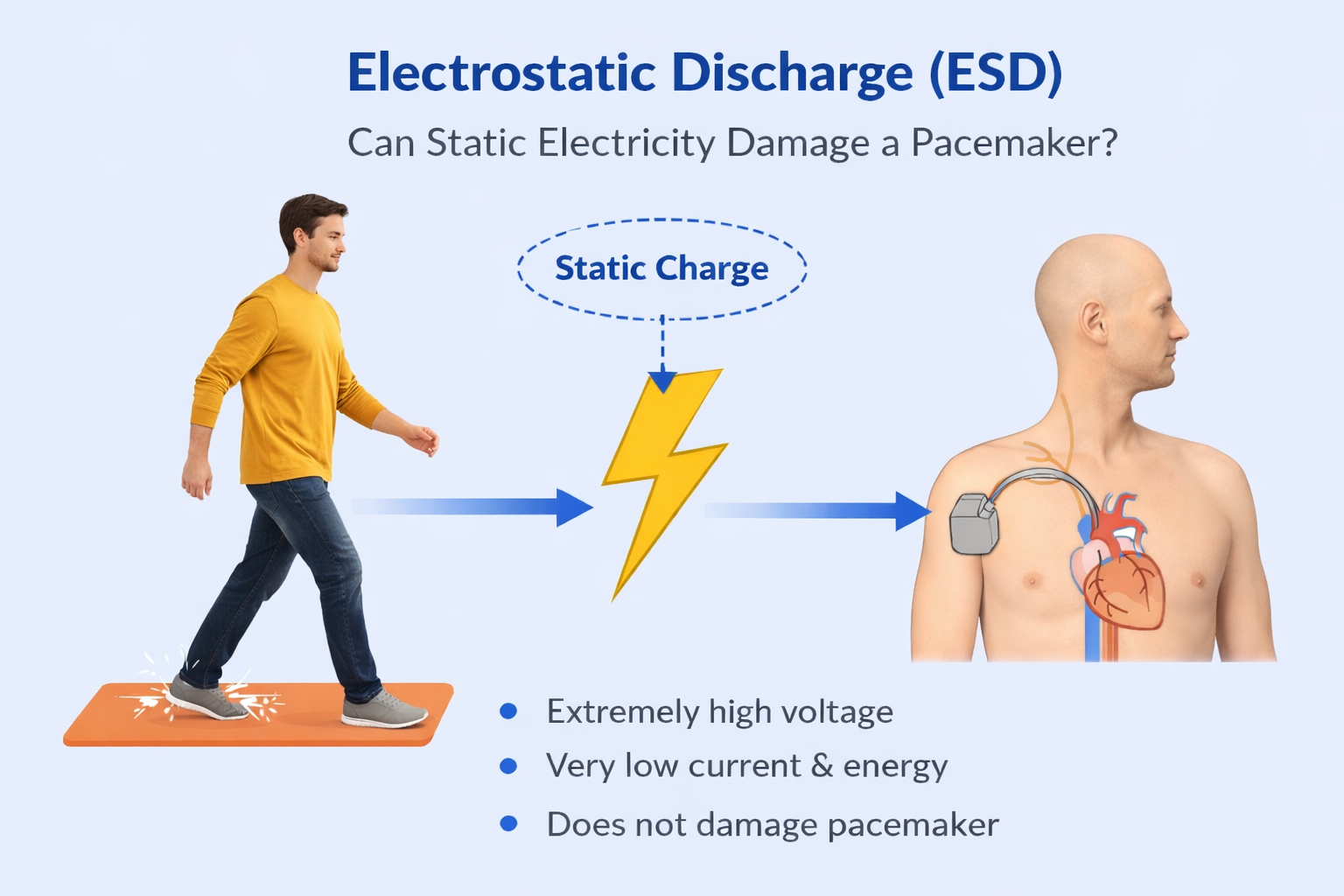
Current evidence and manufacturer information indicate that routine static electricity does not damage modern implanted pacemakers.
What Is Static Electricity?
Static electricity occurs when electrical charge accumulates on the surface of a material. When the charge equalizes between two objects, a brief electrostatic discharge occurs.
Typical characteristics of static electricity include:
• Very high voltage
• Extremely low current
• Very short duration (microseconds)
• Minimal total energy transfer
While the voltage in a static discharge may measure thousands of volts, the extremely low current and brief duration mean that the total electrical energy involved is very small.
Why Static Electricity Does Not Damage Pacemakers
Modern pacemakers are designed to operate safely in environments where electrostatic discharge may occur. Manufacturers incorporate multiple protective design features, including:
• Electrical shielding of sensitive circuitry
• Internal filtering and surge protection
• Robust device housings
• Compliance testing for electrostatic discharge events
These protections allow pacemakers to tolerate electrostatic discharges that exceed levels typically encountered during daily activities or most workplace environments.
Because of this design approach, pacemaker manufacturers do not publish a specific static electricity damage threshold. Routine ESD is not considered a mechanism capable of damaging the device.
Manufacturer and regulatory information supporting this understanding includes guidance from:
• The U.S. Food and Drug Administration (FDA)
• Major pacemaker manufacturers such as Medtronic
• Boston Scientific device safety documentation
Important Distinction: Static Electricity vs. Sustained Electrical Energy
It is important to distinguish static electricity from other electrical exposure scenarios.
Damage to implanted cardiac devices generally requires:
• Sustained electrical energy
• Direct electrical coupling with higher current
• Heating effects from prolonged current flow
• Exposure to strong electromagnetic sources in close proximity
Static electricity is fundamentally different from these conditions. An electrostatic discharge occurs extremely quickly and does not deliver sustained current to the device.
For this reason, transient ESD events encountered during normal movement, clothing changes, or routine workplace activity are not considered capable of damaging permanently implanted pacemakers.
Static Electricity in Industrial Environments
Some industrial processes can produce larger static charge accumulations, particularly when handling:
• Plastics
• Synthetic textiles
• Conveyor systems
• Powder processing equipment
• Packaging materials
Even in these environments, static electricity events remain extremely short in duration and very low in total energy. As a result, they are not considered a realistic mechanism for pacemaker damage.
Standard industrial static-control practices—such as grounding, humidity control, and antistatic materials—are generally implemented to protect sensitive electronics or prevent ignition hazards, rather than to protect implanted cardiac devices.
Conclusion Regarding Static Electricity
No realistic static electricity exposure, whether measured in volts or kilovolts under normal environmental or industrial conditions, has been shown to damage a permanently implanted pacemaker.
Routine electrostatic discharge encountered during daily life, residential environments, or typical workplace activities does not produce the sustained electrical energy necessary to harm modern implanted cardiac devices.
About the Author
Stuart D. Bagley, MS, CIH, CSP is an environmental and occupational health consultant specializing in electromagnetic field (EMF) measurement, indoor environmental quality investigations, and exposure assessment.
Stuart D. Bagley, MS, CIH, CSP
President
IAQ-EMF Consulting Inc.
📞 (800) 862-9655
📧 sbagley@emftesting.net
🌐 https://emftesting.net