
Workplace EMF and EMI Assessments for Pacemakers, ICDs and Other Implanted Medical Devices
Electromagnetic interference (EMI) can be a workplace concern for employees with a pacemaker, ICD, Inspire sleep apnea implant, or other implanted electronic medical devices.
Industrial equipment such as motors, welders, transformers, high-current electrical systems, magnets, and radiofrequency transmitters can produce electromagnetic fields (EMF).
The key question is not whether EMF exists in the workplace. It almost always does.
The important question is whether the employee can safely work around specific equipment and, if necessary, how much separation is needed.
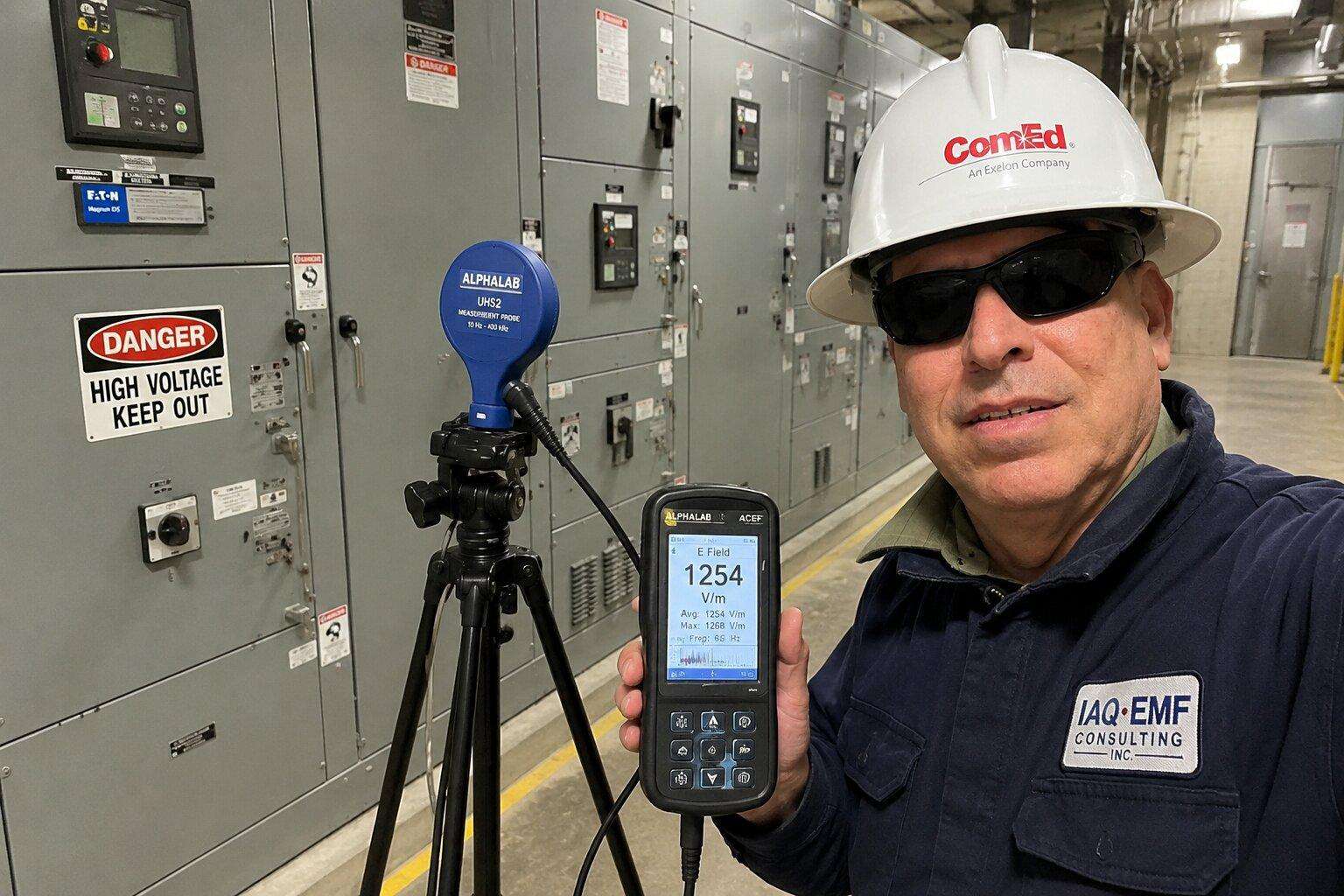
Workplace EMF Exposure and Implanted Medical Devices
IAQ-EMF Consulting Inc. performs workplace EMF and EMI assessments for employers with employees who use pacemakers, ICDs, and other implanted devices. The goal is to replace assumptions with actual measurements
Testing can identify:
- Equipment producing significant electromagnetic fields
- Areas where the strongest fields occur
- How quickly field strength decreases with distance
- Practical safe-work distances
- Areas that may require restricted access or additional controls

Pacemakers, Defibrillators and Workplace EMF
Pacemakers and implantable cardioverter-defibrillators (ICDs) are electronic medical devices that may be susceptible to electromagnetic interference (EMI) under certain workplace conditions. Employees with these devices may work around motors, transformers, welding equipment, magnets, high-current electrical systems, induction equipment, or RF transmitters. A workplace EMF/EMI survey can measure the applicable electric, magnetic, and radiofrequency fields at the employee’s normal work locations and help determine whether additional separation distances, work practices, or other precautions should be considered based on the specific device manufacturer’s guidance.
Inspire Sleep Apnea Implants and Workplace EMF
The Inspire® sleep apnea implant is another implanted electronic medical device that should be considered when evaluating workplace EMF and EMI exposure. Like pacemakers and ICDs, employees with an Inspire implant may work around motors, transformers, welding equipment, magnets, high-current electrical systems, or RF transmitters. A workplace EMF/EMI survey can measure these fields at the employee’s normal work locations and help determine whether additional separation distances, work practices, or other precautions should be considered based on applicable manufacturer guidance.
Common Workplace Sources of EMI
Potential workplace sources include:
- Electric motors and generators
- Transformers and switchgear
- Welding equipment and cables
- High-current electrical systems
- Permanent magnets and magnetizers
- Induction equipment
- RF transmitters and antennas
- Specialized manufacturing and laboratory equipment
The presence of this equipment does not automatically mean that a pacemaker user is at risk.
Field strength, frequency, distance, equipment configuration, and the specific implanted device all matter.
What Does a Workplace Survey Measure?
Depending on the work environment, measurements may include:
- AC magnetic fields
- DC or static magnetic fields
- Electric fields
- Radiofrequency fields
- Measurements at normal work positions
- Measurements along access routes
- Measurements at increasing distances from suspected sources
Results can then be compared with applicable implanted-device manufacturer guidance and other relevant technical criteria.
Establishing Safe Working Distances
One of the most useful results of an EMF/EMI survey is determining how field strength changes with distance.
A machine may produce a relatively strong field close to its electrical components while producing much lower fields several feet away.
Instead of declaring an entire machine, room, or department off limits, measurements may allow the employer to establish a practical approach distance or identify a limited high-field area.
Recommendations may include increasing separation, changing work position, restricting access to a small area, relocating electrical components, or evaluating other engineering or work-practice controls.
For additional industrial applications, see Commercial and Industrial EMF/EMI Testing.
EMF Limits for Pacemakers and Other Implanted Medical Devices
There is no single magnetic-field limit that applies to all pacemakers, ICDs, Inspire implants, and other implanted medical devices.
A criterion for a 50/60-Hz magnetic field may be different from a criterion for a static magnetic field or radiofrequency source.
Whenever possible, the employee should identify the manufacturer and model of the implanted device. Workplace measurements can then be compared with the most applicable manufacturer information and technical guidance.
Medical decisions remain the responsibility of the employee and treating cardiologist or device clinic.
When Is Pacemaker EMF Testing Needed?
Testing may be appropriate when:
- An employee with a pacemaker or ICD is returning to an industrial workplace
- A physician or employee has questions about particular equipment
- The workplace contains welders, transformers, strong magnets, high-current equipment, or RF transmitters
- The employer needs objective measurements rather than assumptions
- A safe-work distance or restricted area needs to be documented
Are All Industrial Machines Unsafe for Pacemaker Users?
No.
Electrical equipment does not automatically make a workplace unsafe for someone with a pacemaker.
Electromagnetic field strength often decreases substantially with distance from the source. That is why direct measurement can be more useful than relying only on the type of equipment.
Professional EMF and EMI Testing
Stuart D. Bagley, MS, CIH, CSP is a Certified Industrial Hygienist and Certified Safety Professional with more than 30 years of industrial hygiene and EHS experience.
IAQ-EMF Consulting Inc. performs EMF and EMI testing for industrial and commercial clients throughout the United States and Canada.
This page provides general occupational and environmental information and is not medical advice. Device-specific restrictions and clinical recommendations should be confirmed with the implanted-device manufacturer and the employee’s treating cardiologist or device clinic.